Traditional Sand-Cement Mortar vs. Ready-Mix Polymer Tile Adhesive: The Definitive Comparison
Why modern architecture has permanently retired thick-bed sand-cement mortar for tile fixing.


The Shift in Tile Manufacturing
Decades ago, ceramic tiles were thick, porous, and small. Traditional cement slurry soaked into their open pores. Today, vitrified and porcelain tiles have almost zero porosity. Thick sand-cement mortar simply cannot adhere to them.
Thin-Bed vs. Thick-Bed Economy
Sand-cement mortar requires a 20mm to 30mm thick bed, adding hundreds of kilograms of unnecessary dead load per room. Polymer tile adhesive requires only 3mm to 5mm, saving floor height, reducing structural dead load, and speeding up project completion threefold.
Consistency and Quality Control
Site-mixed sand and cement suffers from inconsistent sand quality, silt contamination, and uneven water ratios. Vajra Bond ready-mix adhesives are manufactured under strict automated laboratory batch controls with graded quartz and polymers.
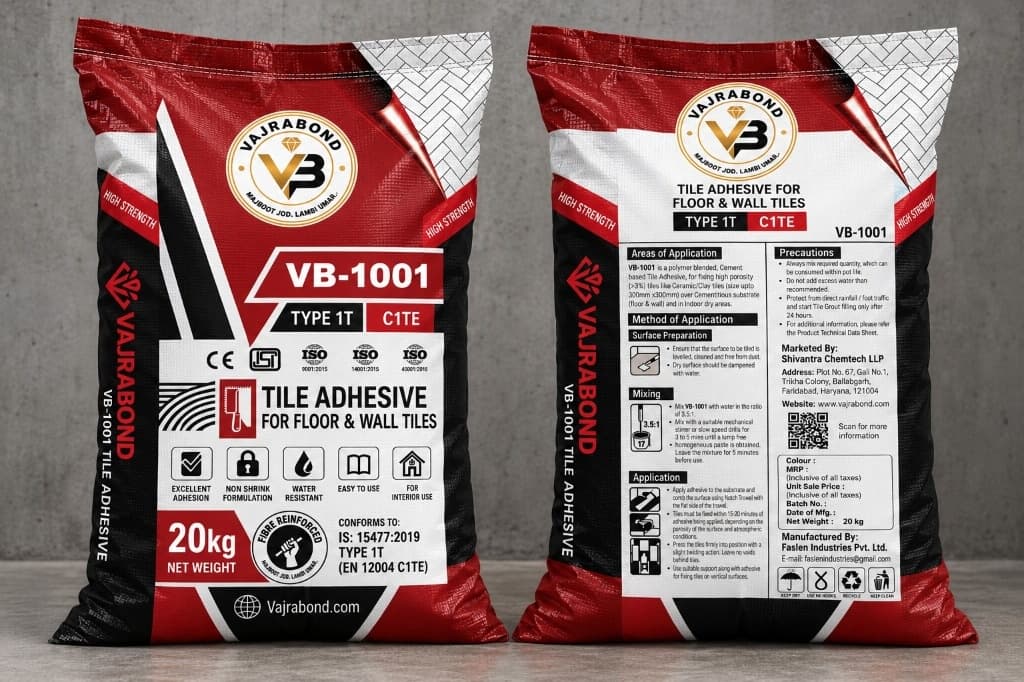
Tile Adhesive for Floor and Wall Tiles
IS: 15477:2019 TYPE 1 T • EN 12004 C1TE
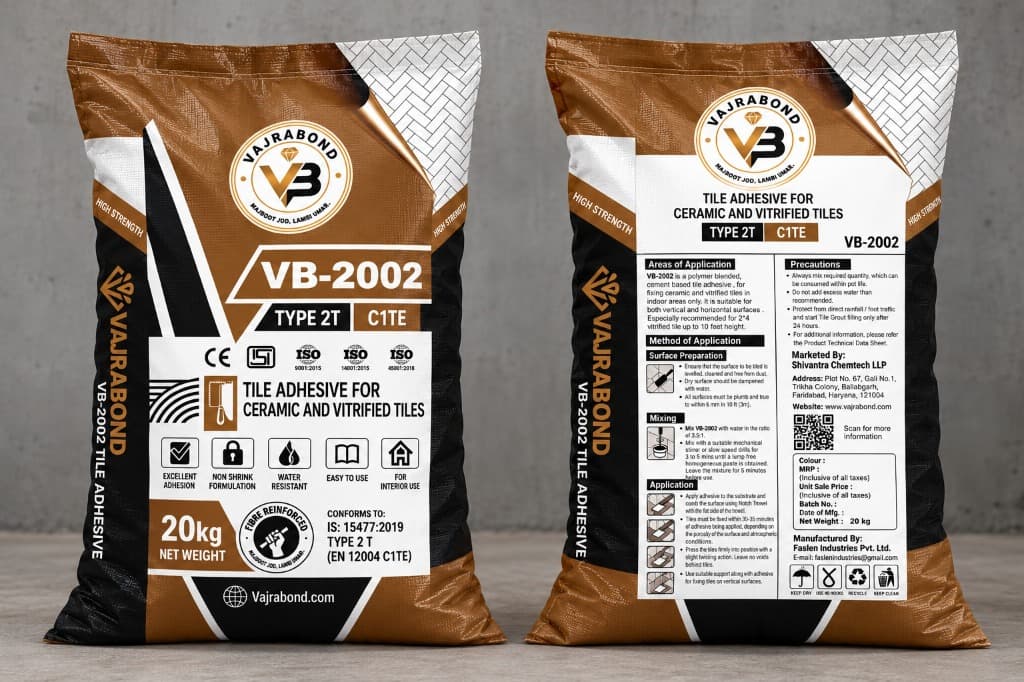
Tile Adhesive for Ceramic and Vitrified Tiles
IS: 15477:2019 TYPE 2 T • EN 12004 C1TE
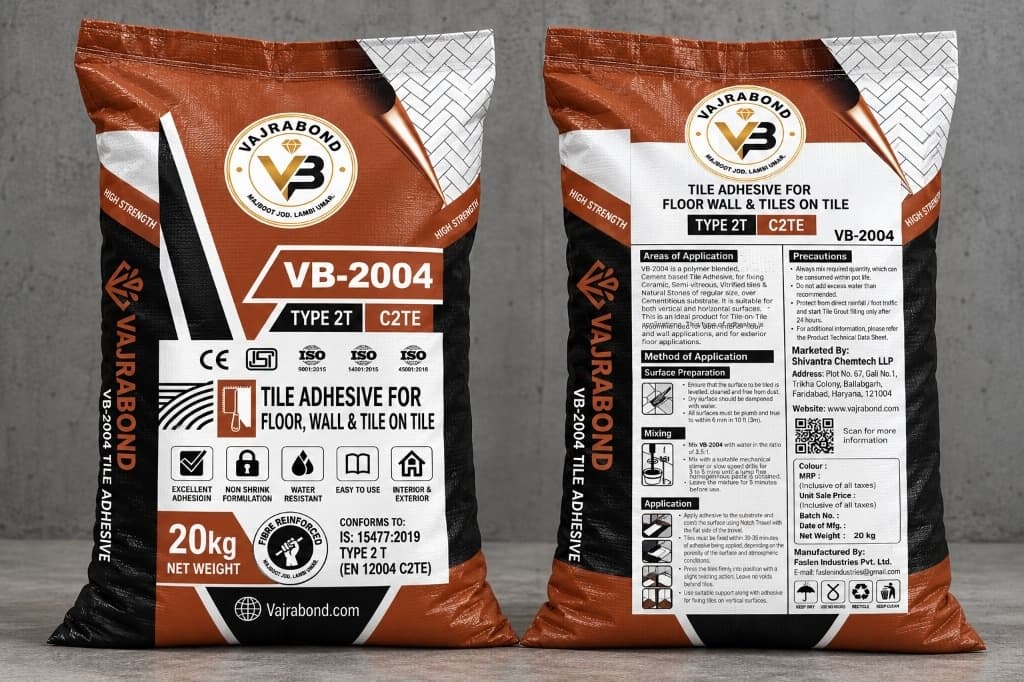
Tile Adhesive for Floor, Wall & Tile on Tile
IS: 15477:2019 TYPE 2 T • EN 12004 C2TE
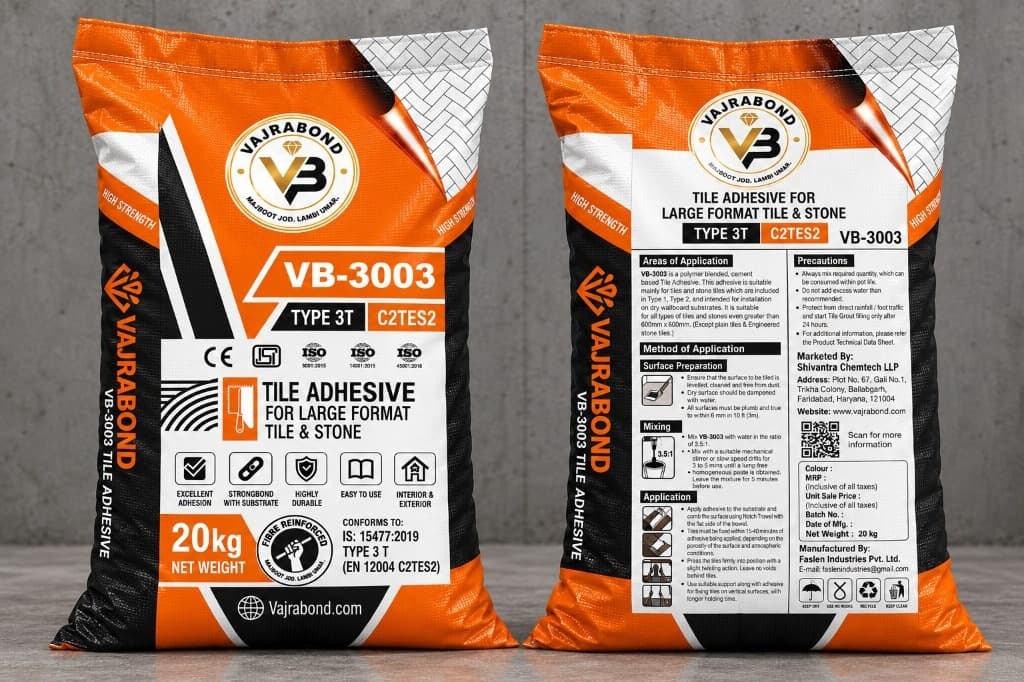
Tile Adhesive for Large Format Tile & Stone
IS: 15477:2019 TYPE 3 T • EN 12004 C2TES2